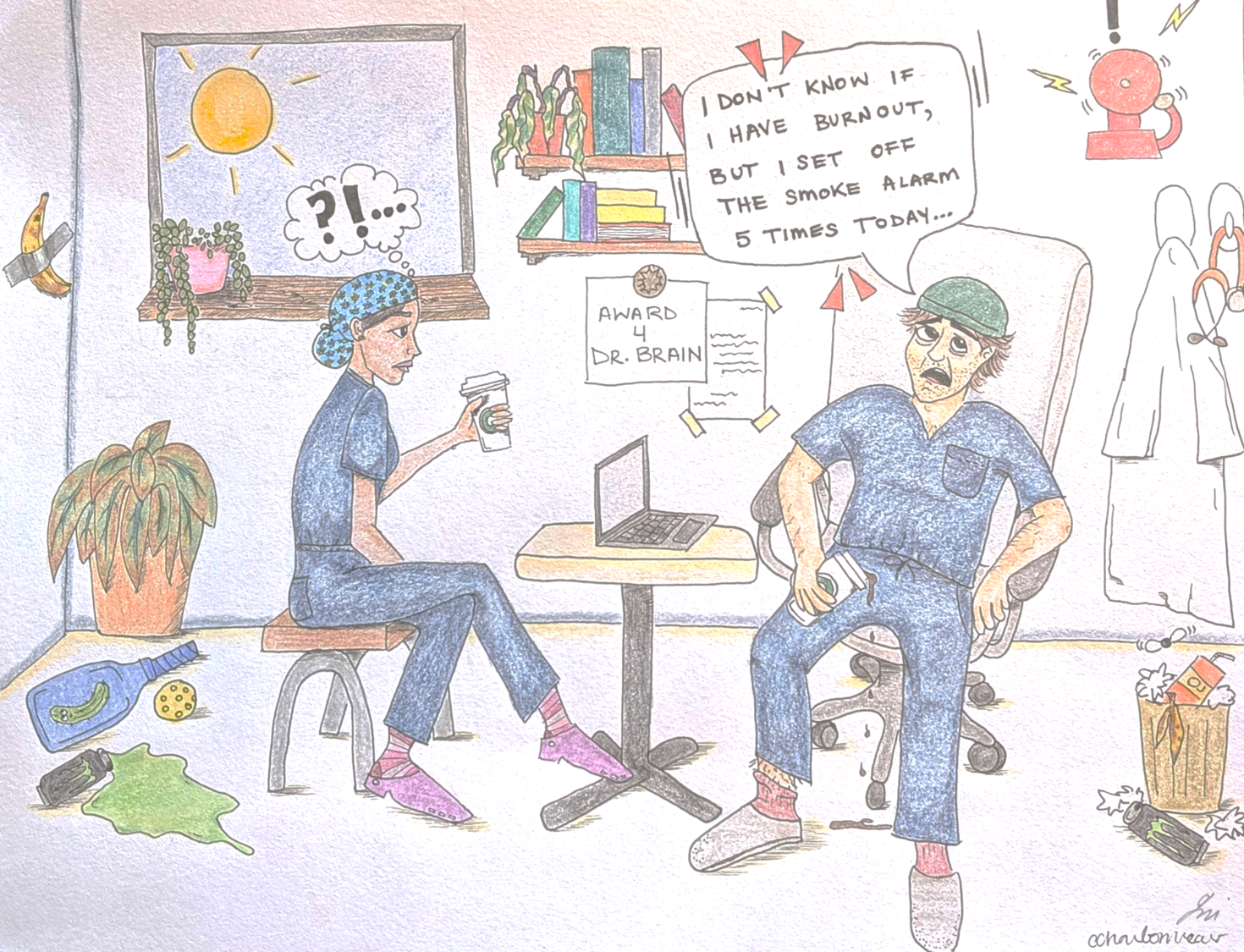
Burnout, a condition affecting nearly half of US physicians, is one of the most pressing issues facing American health care workers. This affliction, characterized by feelings of exhaustion, cynicism and ineffectiveness, is encountered in neurosurgery. A combination of factors, including the potential of poor clinical outcomes, long working hours and heavy caseloads exposes neurosurgeons to the risk of burnout. A 2024 study found that 66.7% of the surveyed neurosurgeons exhibited some level of burnout; this exceeded the average rate among all physicians. Below, we discuss steps that can be taken on both individual and institutional levels to combat burnout in neurosurgery.
INDIVIDUAL STRATEGIES
In demanding fields such as neurosurgery, it is imperative that surgeons are equipped with tools to prevent and combat burnout. In 2022, U.S. Surgeon General Vivek Murthy released an advisory detailing specific strategies for health care workers to mitigate burnout. Many of the recommendations centered around fostering connections with colleagues and family to avoid isolation. These connections largely fall into two categories: being a support system for others and identifying those who can support you. The combination of both creates a workplace culture that ensures every member has someone to rely upon, allowing burnout to be identified and addressed at an early stage.
A 2023 study focused on strategies for surgeons to avoid career burnout; many emphasized emotional mechanisms and physical health. Interpersonal connections were recognized as critical in preventing burnout. Both spending time with family and discussing feelings were felt to be beneficial. In addition, the proactive recognition of stress-inducing triggers was noted as a strategy to address burnout related to the stressful nature of surgery. Both meditation and yoga were recommended as effective methods of dealing with the mental, physical and emotional toll of a surgical career.
Physical health was explored further in a study published in 2012 tracking quality of life (QOL) scores for surgeons engaged in varying amounts of physical activity. Results showed that adequate amounts of aerobic and muscle-strengthening exercises were associated with higher QOL scores. While a higher QOL score does not guarantee immunity, it can potentially mitigate the effect of burnout on quality of life. It is noted that even a 10-minute outdoor walk can help improve factors such as energy and focus.
With the burnout epidemic facing neurosurgeons in the U.S., personal strategies such as strong relationships and physical health can be vital tools of a surgeon seeking to prevent burnout in their career.
INSTITUTIONAL STRATEGIES
While personal strategies for combating burnout can be effective, institutional-level action is needed to address the root causes of burnout in neurosurgery. These interventions can be employed at many different levels of leadership and contribute to a safer, more effective working environment benefiting both surgeons and patients.
An analysis of surgical residents at Stanford University and Washington University in St. Louis found that social belonging was a major predictor of well-being and potential attrition. For institutions, promoting a sense of belonging among surgeons and residents is paramount, especially for those of backgrounds underrepresented in medicine. A resident-targeted intervention using Balint Groups, seminars in which physicians can discuss difficult emotional interactions with patients, showed decreased levels of burnout after a 12-month period. This data highlights the necessity of interpersonal relationships in preventing burnout and stresses the role of the institution in creating an environment that facilitates these connections.
An initiative at the Mayo Clinic has shown that institutional-level actions have a significant impact on the burnout of physicians. In response to an increase in burnout among Mayo Clinic physicians, a nine-part plan was implemented to curb this rise. The plan, with components ranging from restructuring compensation to allowing flexibility in physician schedules, saw physician burnout levels at the Mayo Clinic fall 16% below the national level. Further research conducted at the Mayo Clinic showed that high-quality leadership was correlated with decreased levels of burnout. Physicians scored their supervisors on a 60-point leadership quality scale, with results showing that a one-point increase in leadership rating was associated with a 3.3% decrease in burnout likelihood.
The flexible scheduling pursued by the Mayo Clinic is applicable not only to practicing physicians but to residents as well. This is crucial as residents are considered some of the most at-risk individuals for burnout in neurosurgery. In a 2016 systematic review and meta-analysis, a 12% reduction in burnout was estimated for residents who worked within duty hour limitations.
These strategies illustrate the many ways that burnout can be proactively identified and addressed at the institutional level. By building a culture that encourages strong interpersonal relationships, especially among underrepresented minorities in medicine, institutions can help individuals identify burnout earlier and connect physicians to the resources they need. In addition, the adoption of strategies pioneered by the Mayo Clinic, such as flexible scheduling and high-quality leadership, is effective at fighting burnout on multiple fronts.
CONCLUSION
With burnout leading to attrition, physician suicide and decreased quality of patient care, action can be taken at both the personal and institutional levels to address this malady. Individual methods of limiting burnout can include fostering strong relationships with colleagues and those outside of the medical field to incorporating exercise into the daily routine. Although relatively simple, these small changes can help neurosurgeons deal with the challenges of the work. Organizations should foster a supportive and open culture regarding burnout. Other institutional actions include flexible scheduling to allow time for community, exercise and hobbies. Ultimately, a collaborative approach between neurosurgeons and health care institutions is required to reduce burnout in neurosurgery. Organizations must lead the way by creating avenues to allow surgeons the time and resources to fight burnout on a personal level. A reduction in neurosurgical burnout will lead to higher rates of retention, increased career satisfaction and better patient outcomes, resulting in the improvement of neurosurgical care nationwide.


Ibrahim Ahmad, BA
Ibrahim Ahmad received a Bachelor of Arts from Northwestern University. He has been working in research at Northwestern since 2022 in the Departments of Biochemistry and Molecular Genetics and Neurological Surgery. He is currently applying to medical school and has interests in global medicine as well as the social and structural determinants of health.

Meghan Meredith, BS
Meghan Meredith received a Bachelor of Science degree from the University of Illinois Urbana-Champaign. She has been working in clinical research at Northwestern University since 2022 in the Departments of Neurosurgery and Dermatology. She is currently applying to medical school and has an interest in neurosurgery and a passion for investigating pediatric disabilities.
Aruna Ganju, MD, FAANS, FACS is an associate professor of neurological surgery at Northwestern University’s Feinberg School of Medicine in Chicago and the current editor of AANS Neurosurgeon. She is a past chair of the AANS/CNS Section of Women in Neurosurgery (WINS) and Residency Program Director in the Department of Neurological Surgery at Northwestern University Feinberg School of Medicine. Her clinical areas of interest are surgical treatment of disorders of the spinal column and cord.