

Introduction
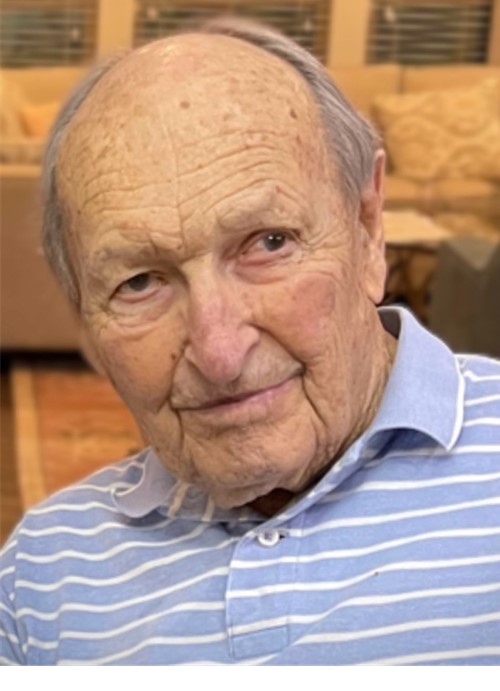
Donald (Don) F. Dohn (Fig 1.) is the oldest living Past President of the Congress of Neurological Surgeons (CNS) and the American Association of Neurological Surgeons (AANS). He has made substantial contributions to the field, and his excellent patient care is legendary amongst all who know him. His greatest contributions to neurosurgery occurred before the advent of modern technologies, such as computed tomography and magnetic resonance imaging, were discovered. During his career, he was focused on patient care and the training of the next generation of neurosurgeons. This historical vignette outlines Dr. Dohn’s life and work in neurosurgery. Dr. Dohn’s example and insights can be a resource for neurosurgeons in the current chaotic milieu of neurosurgical practice contributing to physician dissatisfaction and burnout.
Early Years
Donald F. Dohn was born in Buffalo, New York on August 16, 1925, to Carlton Herbert Dohn and Gertrude Marie (née Pratt) Dohn. There were two sisters already in the family — Betty Marie (born in 1921) and Dorothy Jane (born in 1923.) A third sister, Barbara Jean, was not born until 1932. Hospital births were unusual in the 1920s; nevertheless, Don and all of his sisters were born at Millard Fillmore Hospital in Buffalo and delivered by the same doctor.
Don was a sportsman, played football and was active in Boy Scouts. He earned his Eagle Scout and notes that scouting strongly helped shape his character and drive. Church was also a central part of Don’s life. The Jesse Ketchum Award for academic excellence was started in 1873 and awarded to the top Buffalo students; Don’s father earned this award. Following in his father’s footsteps, Don received the award in 8th grade.
Family
Don was fortunate to be raised by nurturing parents. He remembers his parents Carlton Herbert and Gertrude Marie respectfully and fondly noting that his progressive parents prioritized their kids’ education.
Don’s children include Deborah Ann (born in 1953), Douglas Allen (born in 1955), and David Bryan (born in 1958). Don introduced his young children to Colorado, where he built a house in Vail. They decided that they wanted to stay in Colorado which is where his adult children still live. Don also has 9 grandchildren and 14 great grandchildren.
He married his wife Carolyn, who was the first Nurse Clinician at the Cleveland Clinic in 1979. They shared many interests and they both became pilots and sailors. After getting their flying licenses, the couple bought and flew their own plane for 6 years. Don was also a sailor, so they got a sailboat and sailed around the Gulf of Mexico. Carolyn, the perpetual student, pursued and earned a Law degree. Her early practice in Alabama included medical negligence defense. She then pursued and obtained her master’s degree in taxation. She practiced law until 2016.
Draw to Neurosurgery
As a young man he “was at sea;” Don asked himself, “what am I going to do [with my life]?” He ended up serving in the U.S. Army from 1943–1946; following this, he entered the University of Buffalo as a pre-medical student and later received his MD at the same institution in 1952. Neuroanatomy captured his interest, and he became an assistant to the neuroanatomy professor.1 He was a member of the Alpha Omega Alpha Society and received the Bacelli Research Award for investigations of the auditory nervous system that he undertook with his Neuroanatomy professor. The medical school curriculum featured weekly lectures by practicing physicians; in this forum, Don encountered Dr. Wally Hamby, who established the Department of Neurosurgery at the University of Buffalo. While Don rotated at Dr. Hamby’s program, he ultimately decided to train where Dr. Hamby trained in the 1930s, The Cleveland Clinic.
Training
After a rotating internship at Buffalo General Hospital, Don pursued Neurosurgical training at the Cleveland Clinic Foundation. He entered the neurosurgical training program under the tutelage of Dr. W. James Gardner, Chief of Neurosurgery and Dr. Alexander Bunts, whose father was one of the four founders of the Cleveland Clinic. The required training was supplemented with a year as a Fulbright Scholar at the Institute of Neurology, Queen Square in London, England where he was exposed to a wide variety of neurologic conditions. A tour of the major neurosurgical centers in Great Britain and Europe followed and included a unique opportunity to attend the first International Congress of Neurosurgery.
Dr. Gardner was an innovative and skilled surgeon who treated illnesses that others had no interest, experience, or success in treating. He taught by example and lectures.2 His work ethic and patient focus influenced Don who always measured his patient care by “what would Dr. Gardner have done?”
Dr. Hamby, the Cleveland Clinic’s first neurosurgical resident, retired from the University of Buffalo and was recruited by Dr. Gardner to succeed him as chief. Upon completion of his residency in 1958, Don joined the Cleveland Clinic staff, related in part to the urging of Dr. Hamby.3 Don believed that “Dr. Hamby’s influence was immense,” as he was one of the most important teachers and mentors in Don’s medical career. In his reflecting upon working with the mentors who trained him, Don quipped, “Can you imagine working with your two teachers in the same practice?”
Leadership and Engagement
For Dr. Dohn, involvement in organized neurosurgery led to a network of lifelong relationships that yielded new, different, or additional neurosurgical approaches to neurologic problems. Unsurprisingly, Don was always stimulated by this interaction that yielded lifetime learning.
Institutions benefiting from Don’s participation and leadership include but are not limited to the Congress of Neurological Surgery (CNS) (including President), the American Association of Neurological Surgery (AANS) (including President), the American Academy of Neurological Surgeons, the Society of Neurological Surgeons, the American Board of Neurological Surgery, and the Southern Neurosurgical Society. Upon beginning his term as Secretary of the AANS, Don met the previous Secretary on a highway to accept the association records in a cardboard box. Immediately, he realized the need for more professional management and was convinced that a national office was needed. The office was established in 1977 and first led by Executive Director Carl Hauber, JD, (1977-1996).
In his presidential address for the 1979 AANS Annual Meeting in L.A., “Crossroads in Neurosurgery,”4 Don delivered a profound message at a time when there were issues between the CNS and the AANS. The foundational principle of the address was to “Keep the patients’ interest and care foremost in whatever we do in neurosurgery.”
Rise in Academic Neurosurgery
Before becoming the Chief of the Neurosurgical Department at the Cleveland Clinic, Don recognized that there had to be more than “word of mouth” informal education. Up to this this time, the Clinic residency was structured mainly as an apprenticeship in which residents learned via exposure; they would see patients and operate with the staff. Don believed there needed to be a formal educational program instead. He instituted required didactics and courses including neuroanatomy, neurophysiology, neuropathology and neuroradiology. Organized visits to other institutions were also a key component that allowed residents to learn others’ alternative methods of addressing neurologic diseases.
During his tenure as Chairman of the Department of Neurosurgery, “Responsibility loomed large” in Dr. Dohn’s mind. He had the opportunity to effect change; this he did with his formalization of the residency teaching program. He believed that neurosurgical sub-specialization was optimal for patients, physicians and trainees. He incorporated neuroradiology into the department and allowed fellows to rotate through the service; this enhanced the matching of patients’ clinical presentations with radiologic findings, thereby improving care.
A total of 45 neurosurgical residents completed their training under Dr. Dohn’s tutelage. One of his residents, Moses Taghioff, explained that Don was “The Boss.” However, he worked as hard or harder than the residents. Another graduate, Janet Bay, stated that Dr. Dohn was a major mentor and “an experienced and trusted advisor.” Ann Stroink mentioned that “I was inspired and convinced that neurosurgery was a calling while attending his 1979 meeting in L.A. and hearing his presidential address.”5 Finally, Desmond Erasmu “wanted to thank [Don] for all the training that allowed [him] to deliver safe care to [his] patients.”
Career and Life Change
In 1981, Don resigned from the Cleveland Clinic, Ohio and transitioned to a private practice position in Pascagoula, Mississippi. He and his wife Carolyn began a new life adventure. While he received many recruitment offers while he was Chairman at the Cleveland Clinic, he was intrigued by one from Pascagoula. “The position was entirely different with no teaching program; the practice was independent without others with whom to consult but replete with opportunities to expand myself,” he explained. After the move, Don and Carolyn became invaluable members of the community while also exploring their interests of flying and sailing.
In the late 1980s, the Cleveland Clinic contacted Don again. The clinic wanted to establish a new Neurosurgery Department in its new Ft. Lauderdale, Florida location, and they believed Don was the right person to lead it. He and Carolyn moved to Ft. Lauderdale and served in this role until his retirement from neurosurgery.
After retirement, he landed back in Pascagoula in 1991 to cover John McCloskey’s practice as John was called to active duty in the military during the Persian Gulf War. When John returned from his military service, Don and Carolyn were able to finally retire.
Awards and Honors
In addition to his leadership in organized and academic neurosurgery, Don received many honors and awards during his career including a Fulbright Scholarship, the Cleveland Clinic Distinguished Alumnus Award, the Distinguished Southern Neurosurgeon award in 2004.
Dr. Dohn Words of Wisdom
Table 1 provides some of Dr. Dohn’s thoughts that, if heeded, along with the inspiration gained by studying his example will serve to counteract the pervasive burnout of the current neurosurgical workforce.
Conclusion
Don Dohn is a unique individual whom neurosurgery is fortunate to call one of its own. His intellect, insights, character, and generosity have contributed to the lives of innumerable patients, colleagues, and trainees in ways that cannot be quantified. Having Dr. Dohn as a role model is an excellent aspiration. Neurosurgery can identify him as one of its giants, and all who claim to be neurosurgeons stand, at least in part, on his shoulders and be inspired by his contributions which will aide in the battle against physician burnout.
References
1. American Association of Neurological Surgeons. Donald Dohn, MD interviewed by Bruce Sorensen, MD. YouTube. Accessed 30 Nov, 2023. https://www.youtube.com/watch?v=qgsuwMYDnTE
2. American Association of Neurological Surgeons. W. James Gardner, MD interviewed by Donald F. Dohn, MD. YouTube. Accessed 30 Nov, 2023. https://www.youtube.com/watch?v=wg_9cIy7Y5w
3. American Association of Neurological Surgeons. Wallace B. Hamby, MD interviewed by Donald F. Dohn, MD. YouTube. Accessed 30 Nov, 2023. https://www.youtube.com/watch?v=dv1a3Tg5PfE
4. Dohn DF. Neurosurgery at the crossroads: leadership role of the American Association of Neurological Surgeons. The 1979 AANS presidential address. J Neurosurg. Oct 1979;51(4):429-36. doi:10.3171/jns.1979.51.4.0429
5. American Association of Neurological Surgeons. Ann R. Stroink, MD, FAANS, AANS Presidential Address. YouTube. Accessed 30 Nov, 2023. https://www.youtube.com/watch?v=6tA2YnzOIrM
Tables
| Table 1. Don Dohn Words of Wisdom |
| When asked about things Don treasures from his Neurosurgical career, his responses include: “Neurosurgery is a very unique specialty which developed dramatically over my career with cutting edge methods, and this continues to be true.” “This career provides the opportunity to change the lives of patients who otherwise cannot be helped.” “Observing patients’ responses to Neurosurgical care gives the chance to help change and improve care provided and do a better job going forward.” “Neurosurgery is very special as it provides a fellowship or brotherhood with other neurosurgeons based on common educational paths, training experiences, patient experience/results sharing, and the extreme work schedule all encounter.” |
| Don’s Advice to those who aspire to become a Neurosurgeon: “Spend time on a Neurosurgical service to get a true knowledge of what Neurosurgeons do and what they encounter on a daily basis.” “Develop a strong base of knowledge in NeuroAnatomy and NeuroPhysiology and take educational course in the Neurosciences.” |
| Thoughts on late career or retired Neurosurgeons’ continued involvement in Neurosurgery: Is there a role? — “Yes and No.” “There are and have been Neurosurgeons who perceived that the world would fall apart without their skills. At times the world would be better if those skills were not utilized.” “Senior Neurosurgeons can be helpful in assisting others achieve their goals.” |
| How does one become a mentor? Physicians become mentors by “giving.” “One cannot just say I want to be a mentor and it happens.” “True mentors help other students, residents and colleagues achieve their goals. A mentor can counsel by sharing his/her own life experiences – good and bad. Sometimes knowing what not to do is as important as knowing what to do.” “Neurosurgical practice and experiences provide a rich base to share insights with those coming behind.” |
| Don’s thoughts for those contemplating retirement from Neurosurgery: “Don’t feel that the world cannot get on without you.” “Consider your contributions to the world, life and patients served.” “Think about life and ways to enhance your own life experience. Follow a pathway toward things you have always thought you would enjoy but could not because of the time practice demands.” |
Figure Legends
Figure 1. Donald (Don) F. Dohn, MD. (Picture courtesy of Clarence B. Watridge, MD, FAANS(L), FACS. Dr. Dohn has given his consent for the author to use his image.)

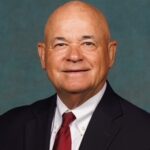
Clarence Watridge, MD, FAANS(L), FACS
Clarence Watridge, MD, FAANS(L), FACS, served as the Chairman of Semmes Murphey Clinic and as Professor at the University of Tennessee Department of Neurosurgery, Memphis, Tennessee.
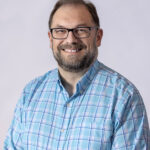
Andrew J. Gienapp, MS
Andrew J. Gienapp, MS, is the Medical Editor for the Department of Neurosurgery, the University of Tennessee Health Science Center, Memphis, TN, as well as the Scientific Editor for the Children's Foundation Research Institute, Le Bonheur Children's Hospital, Memphis, TN.