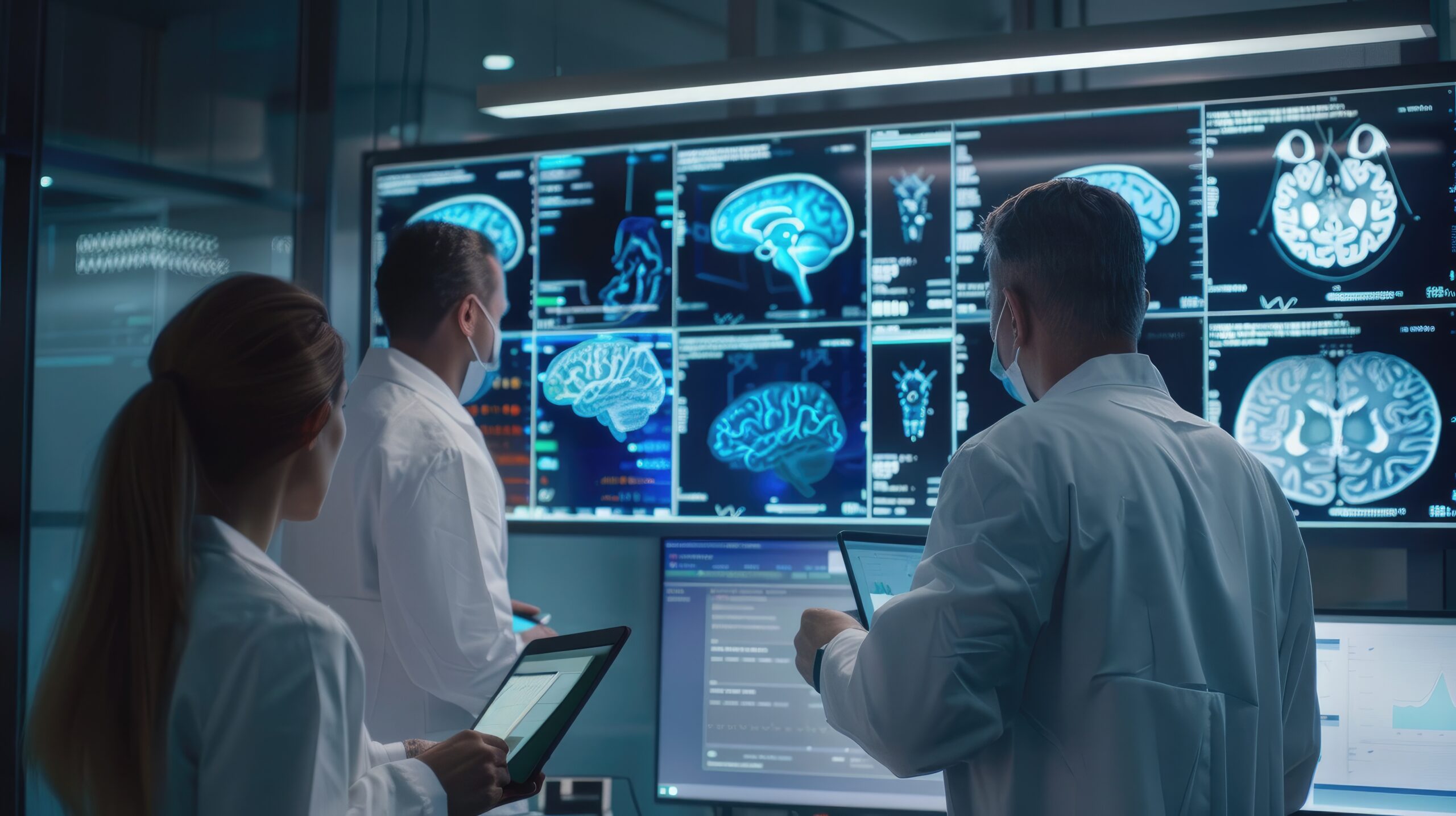
The operating room is perhaps the most sophisticated data-gathering environment in modern medicine, offering a front-row seat to the intricate mechanics of the human nervous system. Yet, historically, much of what we learn from those interactions never becomes part of a shared scientific understanding. The signals generated through patient care are often fragmented across devices, institutions and research studies. Some remain embedded in clinical systems that are never designed for discovery, while others exist only as tacit observations from individual clinicians.
This is a structural bottleneck choking off the neuroeconomy, the new era of growth and human potential driven by AI-powered neuroscience. If intelligence is left fragmented, clinicians miss out on the opportunity to lead, leaving technology and life sciences companies without access to the validated, clinician-led datasets, and driving up the cost and time-to-market for new innovations that could transform brain health at scale.
The evolution of AI and machine learning have created new, structured ways to organize insights, using the enormous amount of data generated through patient care to build smarter tools capable of recognizing patterns at scale. But it is not enough to take advantage of technology. We, the human experts, must become active stewards of the neuroeconomy. Because neurological intelligence reflects human identity, its organization must be led by those who understand its clinical weight.
What neurosurgery needs is a governing entity that fosters shared intelligence, establishes ethical and clinical guidelines for AI usage and ensures that data gathered through patient care is stewarded responsibly.
The Confluence of Data and Care
Neurosurgery AI tools are helping answer the call of clinicians advocating for better organization of knowledge, which is only more important now that technology provides for an ever-increasing volume of data. For example, high-resolution MRI and CT scans used for pre-operative imaging result in massive DICOM files. Inter-operative data has expanded to include electrophysiological monitoring, surgical video and neuro-navigation coordinates. After surgery, still more data is gathered in the form of ICU telemetry, pathology reports, genomic sequencing of tumors and patient-reported outcome measures.
Under the current system, the vast majority of this data is siloed; but it is now possible, through AI, to not only compile data but generate new insights. By synthesizing these disparate streams, AI can identify complex correlations and longitudinal trends that escape manual human review, effectively transforming raw physiological inputs into actionable clinical roadmaps. The brain’s sheer complexity means that AI is particularly well-suited to unearthing its subtle patterns, including which interventions work for some patients and not others, pulling from large experience, emotion and behavior datasets.
Safeguarding Medical Trust
It’s critical that clinical experts be at the helm of this new technology. While the tech industry is instrumental to building the next-generation tools that enable discovery and improve care, only a clinician understands their true value for patients. For example, a tech-driven model might determine that a certain surgical approach is more efficient based on operative times, while a clinical-led body would recognize that the same approach increases the risk of long-term neurological deficits.
Quantitative insights must be guided by clinical expertise in order to distinguish which patterns are significant and useful as the neuroeconomy becomes integral to the broader innovation economy. This ensures that clinicians remain at the forefront as technology enables new and more powerful computational models of the brain, larger datasets and new device platforms spanning multiple sectors, including brain health, neurologic care, cognitive enhancement, mental health innovation and neuro technology.
In addition to shaping the way insights are interpreted, clinicians must also have an avenue for keeping patient care, not investors or the market, as the focus of shared intelligence. Neurosurgical data is perhaps the most intimate data a human generates, involving brain mapping, cognitive function and personality-altering interventions, and pooling high-fidelity data may increase the risk of sophisticated AI re-identifying patients, leading to unforeseen ethical dilemmas in insurance. Governance must be handled by those who are professionally and ethically accountable for patient privacy, not just those who are technically capable of encryption.
Fostering Shared Intelligence
The emerging neuroeconomy represents a transition from a collection of brilliant, but isolated, practitioners into a unified network of shared wisdom that facilitates conversation with government, big tech, investors and insurance payers. By aligning the clinical precision of academic centers with the regulatory frameworks of government and the scalability of big tech, a governing body ensures that shared intelligence becomes a structured reality rather than a theoretical goal. This move allows the neurosurgical community to transcend its own borders, integrating fragmented data silos into a living body of knowledge that drives global policy, commercial innovation and the collective mastery of the field.
This collaborative approach is also essential for standardizing how we interpret neurological signals at scale, creating universal guidelines that big tech and regulators can rely on. Without a clinician-led body to shape governance and validation pathways, we risk a landscape where market-driven AI tools are disconnected from the nuanced reality of the operating room. By serving as the primary architects of these standards, clinicians ensure that these innovations align with clinical truths and prioritize long-term patient outcomes over purely technical or market-driven metrics.
Ultimately, this is about shaping the future of our profession and patient care. By guiding the ethical and clinical frameworks of AI usage alongside policymakers and tech developers, we ensure that the intelligence of the next generation remains firmly rooted in the values of patient care. It is a commitment to a future where the neuroeconomy serves to amplify the surgeon’s expertise and value, ensuring that every patient benefits from the totality of our integrated, global experience.
The Foundation for Digital Neurosurgery builds the frameworks that safely transform neural insights into shared intelligence, with neurosurgeons at the center. Launched in partnership with AANS with broad support across organized neurosurgery, the Foundation establishes the clinical governance and ethical standards that allow neurological learning to compound over time and across institutions. Learn more about the Foundation here.


Samuel R. Browd, MD, PhD
Co-founder and president at the Foundation for Digital Neurosurgery, is a pediatric neurosurgeon, innovator and national leader in the evolution of digital neurosurgery. He serves as Professor of Neurological Surgery at the University of Washington and is an attending neurosurgeon at Seattle Children’s Hospital. His career focuses on bringing advanced technologies, including AI, computer vision and next-generation surgical platforms, into patient care.

Daniel A. Donoho, MD
Co-founder and vice president at the Foundation for Digital Neurosurgery, is a pediatric and adult neurosurgeon, researcher, and a key innovator in the global surgery landscape. The founder of the Surgical Data Science Collective, he serves as Assistant Professor of Pediatric Neurosurgery at the National Children’s Hospital and Assistant Professor of Neurosurgery at The George Washington University Hospital. His research bridges technological innovation with practical application, advancing the integration of AI into surgical practice.