
The use of the word “Mentor” dates to Homer’s Odyssey, when Odysseus ordered his son, Telemachus, to lead his army while he was away during the Trojan war. Odysseus appointed a guardian named Mentor to guide Telemachus in his absence. Ironically, Mentor failed miserably, and the Greek gods had to intervene to keep Odysseus on the throne. Athena took Mentor’s place as Telemachus’ guardian, leading to his success in protecting his father’s throne. This story highlights a few important points regarding mentorship:
- Some of the oldest recorded stories reference the significance of mentors in career development.
- Mentor-Mentee relationships should be intentional. For example, Mentor in the Odyssey may not have been prepared to take on a mentee, leading to a poor working relationship.
- It is important to diversify our mentorship profiles. While it is important to seek out relationships with mentors that look and think like us, it is equally beneficial to seek out mentors with backgrounds and perspectives that differ from our own.
- Mentorship matters. Telemachus would have lost his father’s throne were it not for the guidance of his mentor, but he was able to succeed by his own will and the help of a professional advocate.
Mentorship is incredibly impactful for young trainees, and medical students often choose specialties based on their mentor’s backgrounds. I would wager that nearly all neurosurgeons can identify a specific surgeon who impacted their decision to pursue the specialty. It is important to remember that all neurosurgeons are ambassadors for the field. One short interaction between a neurosurgeon and medical student could alter the latter’s career path forever. Because neurosurgery is exceedingly competitive, it is imperative for students to get connected with resources early to learn more about the specialty while seeking opportunities to facilitate professional networking.
While preparing for examinations and engaging with educational opportunities is each trainee’s responsibility during residency, trainees require guidance from faculty to teach them the ins and outs of surgical procedures, clinical decision making and patient care. The daily investment in residents by attendings in each residency program coalesces into an immeasurable shared experience for the trainee, providing them with a toolbox of approaches to solve a single problem. While this mentorship style may seem less formalized, it is a crucial aspect of training that impacts residents daily. Some residency programs additionally have a formalized structure for mentorship in which residents are paired with an attending and mentored longitudinally throughout the course of their training. Outside of seeking to understand different ways to approach surgical problems, residents also often look to mentors to discuss interview preparation, work-life balance and job opportunities after training.
From Socrates and Plato to Spetzler and Lawton, history is full of epic mentor-mentee relationships that have changed the course of their respective fields for the better. The role of neurosurgeons now is to shape the future of neurosurgery by engaging intentionally in opportunities to mentor the younger generation. Mentorship matters, is ongoing and when optimized, can contribute to the exponential growth of a field.
Disclosure
The opinions or assertions contained herein are the private ones of the author and are not to be construed as official or reflecting the views of the Department of Defense, the Uniformed Services University of the Health Sciences or any other agency of the U.S. Government.

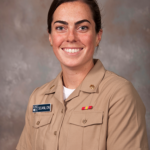
Michaela Scanlon is a fourth year navy medical student at the Uniformed Services University. She matched into neurosurgery through the military match, and will complete training at the UT Health Science Center in San Antonio. Her clinical areas of interest include pediatric neurosurgery, global neurosurgery and critical care."