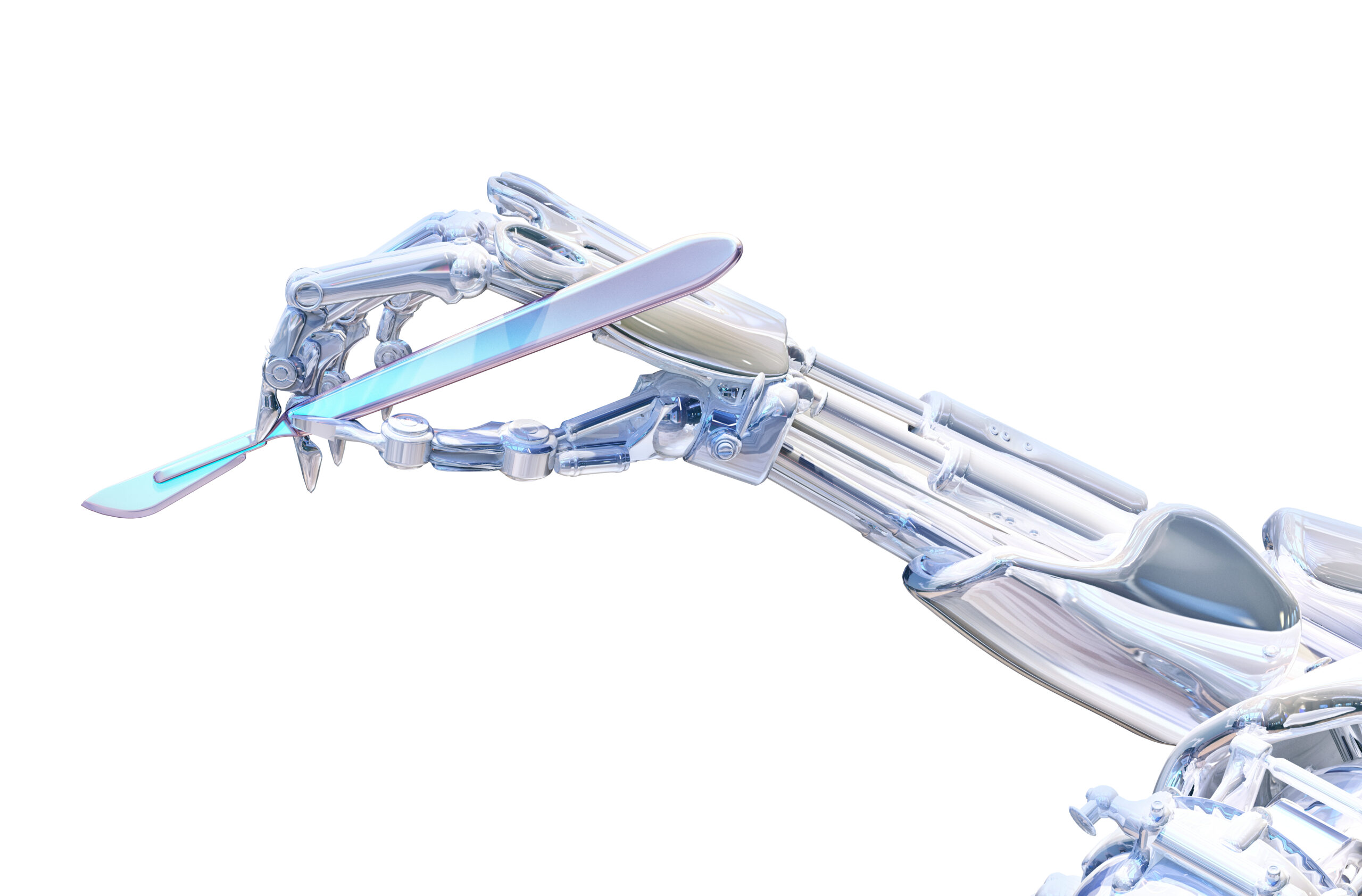
Artificial intelligence (AI) has emerged as a revolutionary force in medicine transforming research and care paradigms. From neural networks that analyze vast data sets to AI systems generating realistic medical images, the potential of AI in medical practice is undeniable. However, when it comes to neurosurgical education, we must tread carefully. Our mission is to train neurosurgeons not only as skilled practitioners but also as critical thinkers and innovators. Are we too eager to hand the scalpel off to AI?
The Promise and Perils of AI in Training
AI-powered tools, such as visualization systems and simulators, offer numerous possibilities for neurosurgical training. These technologies can provide real-time feedback, simulate complex procedures, and offer detailed analytics on performance. However, we must carefully evaluate what aspects of training they enhance and what they may diminish. A recent study from McGill University’s Neurosurgical Simulation and AI Learning Center provides a critical insight. It found that while students receiving real-time feedback from the AI-based Virtual Operative Assistant improved in safe tissue resection, those without feedback operated more efficiently. This prompts us to consider: what trade-offs can we afford in refining surgical education?
What Are We Risking If We Rely on AI for Training?
Relying heavily on AI for neurosurgical training risks compromising several key aspects of the educational process. Firstly, the development of critical thinking and problem-solving skills may be stunted. Traditional training methods involve complex case discussions, real-time decision-making, and hands-on practice, all of which foster deep understanding and adaptability. AI systems, however, often provide predefined solutions; this may lead to a passive learning experience and reduced engagement from trainees.
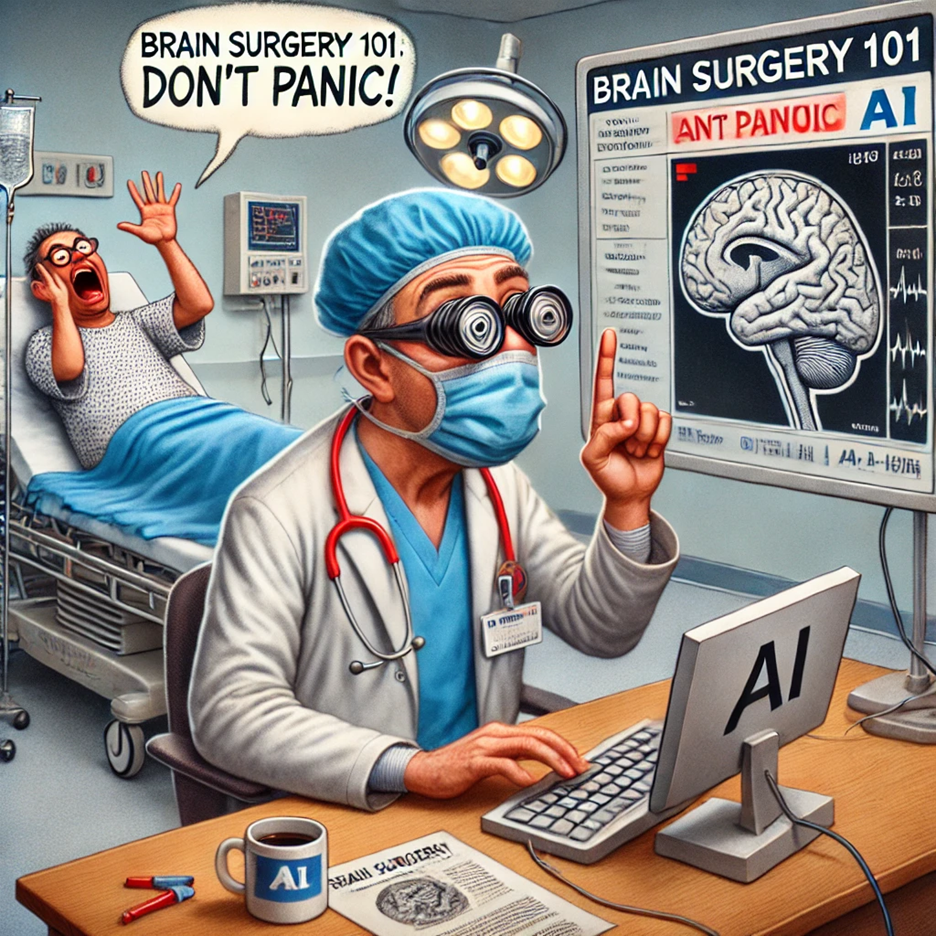
AI generated figure of a neurosurgeon receiving AI education.
Moreover, the mentorship aspect of neurosurgical education could be diminished. The mentor-apprentice relationship is crucial for imparting not only technical skills but also the tacit knowledge that comes from years of clinical experience. This includes the subtleties of patient interaction, ethical decision-making, and professional conduct, none of which can be effectively conveyed by AI systems. Personalized instruction, which adapts to the unique needs and progress of each student, is essential for effective education and is something AI is currently ill-equipped to provide.
Additionally, AI-driven training tools may inadvertently reinforce existing biases present in their programming data. This could lead to skewed learning experiences and propagate disparities in healthcare delivery. The lack of diverse, real-world scenarios in AI training modules might also leave trainees unprepared for the variety of cases they will encounter in actual practice.
Finally, over-reliance on AI could reduce opportunities for collaborative learning and critical discourse among trainees. Peer interaction and collective problem-solving are vital components of medical education, fostering a collaborative environment where students learn from each other’s experiences and insights.
The Human Element in Surgery
One of the strongest arguments against the use of AI in neurosurgical education is the irreplaceable human element in surgery. Neurosurgery is as much an art as it is a science, requiring not only technical skill but also empathy, decision-making under pressure, and the ability to adapt to unforeseen circumstances. These qualities are developed through years of hands-on experience, mentorship, and patient interaction. AI, in its current form, lacks the ability to cultivate these essential human attributes. By overly relying on AI, we risk producing a generation of surgeons who are technically proficient but lack the critical soft skills necessary for patient care.
Balancing Innovation with Tradition
While embracing progress is essential, we must not forsake time-tested methods. A judicious blend of innovation and tradition is crucial in creating a personalized learning system that retains mentor-apprentice relationships and fosters clinical judgment. We should be cautious adopters of technology, ensuring it complements rather than replaces, the foundational aspects of neurosurgical training.
In conclusion, while AI offers exciting possibilities for neurosurgical education, we must approach its integration with caution. The development of critical thinking, problem-solving skills, and the human element in surgery are irreplaceable aspects of medical training. Over-reliance on AI risks undermining these essential components. We must strive for a balanced approach that leverages AI’s strengths while preserving the invaluable elements of traditional surgical education. In doing so, we can ensure that the future of neurosurgery remains rooted in both innovation and humanity.


Rishi Jain is a medical student at the Feinberg School of Medicine and member of the Honors Program in Medical Education. He is passionate about bridging his interests in artificial intelligence, engineering and neurosurgery to develop tools for clinical care and medical training.

Najib El Tecle, MD, is an assistant professor of neurological surgery at Northwestern University, Feinberg School of Medicine, specializing in neurosurgery and spine surgery. Dr. El Tecle has a background in computer science and biomedical engineering that he uses to advance technology pertaining to the treatment of spinal diseases.