
Marchelle Altshuler, MD
Dr. Marcelle Altshuler is a fourth year neurosurgery resident at Brigham and Women’s Hospital and Boston Children’s Hospital at Harvard Medical School and is current Fellow in Surgical Education and Simulation Research at Massachusetts General Hospital, with a focus on resident assessment and curriculum development in neurosurgery.
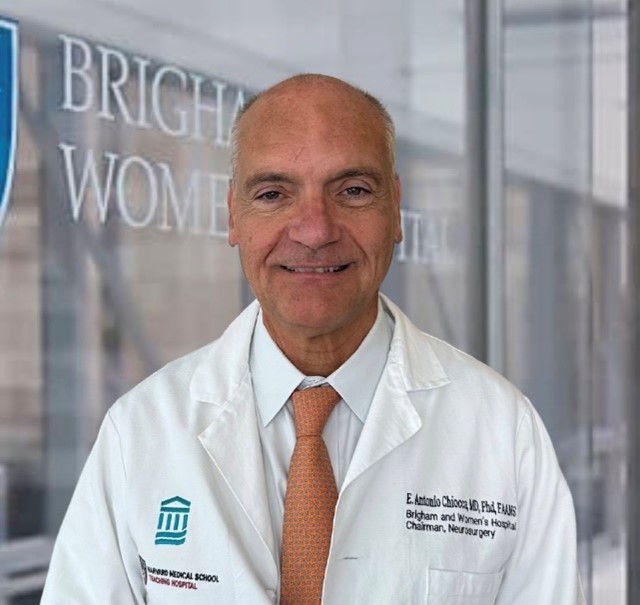
E. Antonio Chiocca, MD
Dr. E. Antonio Chiocca is the Harvey Cushing Professor of Neurosurgery at Harvard Medical School and the Chair of the Department of Neurosurgery at Brigham and Women’s Hospital.
In the high-stakes, precision-driven world of neurosurgery, education transcends the mere acquisition of knowledge. As residents navigate the rigorous path to becoming fully fledged neurosurgeons, the essence of what matters in our education can be distilled into three core components: graduated operative experience, a nuanced, continuous assessment system and constructive feedback.
Graduated Operative Experience: The Bedrock of Neurosurgical Mastery
At the heart of neurosurgical education is graduated operative experience. Initial stages often involve observation and assistance, gradually progressing to more complex tasks and, eventually, to conducting operations under supervision. True autonomy in the operating room encompasses more than just the mechanical aspects of performing surgery; it involves making critical decisions under pressure and dealing with the realities of unplanned challenges and surgical complications. This form of autonomy is crucial for developing residents into competent surgeons who can navigate the complexities of neurosurgery. Having the opportunity to operate under the watchful eye of experienced mentors provides a safety net while allowing residents to learn from the inherent pressures of surgery. Moreover, the role of observation cannot be understated — watching skilled surgeons at work offers invaluable lessons. Therefore, it is imperative that residency programs offer a balanced mix of operative autonomy and observational learning opportunities at all stages of training, ensuring that residents gain diverse and rich experiences that build upon each other, rather than segregating observation and autonomous practice by seniority.
Such a model emphasizes the importance of context — of learning not just how to perform a procedure, but when and why to perform it, and how to adapt to the unexpected. This approach ensures that as residents, we are not just technicians but thoughtful, reflective practitioners.
Assessment System: Charting Progress and Competence
The traditional assessment systems in neurosurgery residency programs, including faculty and co-resident evaluations, ACGME milestones and written examinations, serve as foundational tools for measuring resident progress. However, there is a need for more frequent and comprehensive assessment systems to reflect the multifaceted nature of a resident’s performance more accurately. These systems should encompass both technical and non-technical skills, offering residents a clear, ongoing picture of their development. An ideal assessment system should be not only accurate and valid, ensuring that it measures precisely what it is supposed to, but also reliable. Resident access to a transparent, trackable system that incorporates objective metrics would greatly benefit trainees, allowing for real-time monitoring of their development. Moreover, ensuring that this system measures beyond instances of peak performances to include the evaluation of everyday practice would offer a more holistic view of a resident’s capabilities, capturing their typical performance level and reflecting a comprehensive assessment of their skills.
By offering regular, detailed, trackable assessments on a wide range of competencies, such a system can help residents identify and leverage their strengths, address their weaknesses, and cultivate a well-rounded skill set that encompasses the full spectrum of neurosurgical practice.
Constructive Feedback: The Compass for Growth
Feedback is the cornerstone of effective learning and professional growth in training. When done correctly, it fosters self-assessment, goal setting, and, most importantly, self-reflection, which guides residents on their path to improvement. However, the value of feedback is intrinsically tied to its ability to inspire action and promote learning. Thus, feedback must not only be reflective but also directive, providing clear pathways for growth and improvement.
Constructive feedback, particularly when offered at regular intervals by those with whom we work closely, acts as a vital navigational tool in our educational journey. It is one thing to complete a task; it is another to understand how it could have been done better, safer and more efficiently. Regular, targeted feedback from mentors and colleagues who are familiar with our work and who can track our progress over time is invaluable. The challenge lies in delivering constructive feedback that resonates with the recipient, encouraging them to reflect on their performance and identify concrete steps toward achieving their goals. Such feedback is pivotal to continuous professional development, offering insights that are as likely to refine our technical abilities as they are to enhance our communication skills, teamwork, and ability to handle stress and uncertainty.
Conclusion: The Future of Neurosurgical Education
The essence of What Matters in neurosurgical education for residents lies in a scaffolded approach to learning, a nuanced, continuous assessment system and regular, constructive feedback. Together, these components provide a framework that supports not just the acquisition of technical skills but the development of the thoughtful, reflective and resilient practitioners that the field of neurosurgery demands. As we look to the future, embracing these principles will ensure that neurosurgical education continues to evolve, equipping new generations of neurosurgeons with the skills, knowledge and wisdom to navigate the challenges of this dynamic and vitally important field.


Dr. Marcelle Altshuler is a fourth year neurosurgery resident at Brigham and Women’s Hospital and Boston Children’s Hospital at Harvard Medical School and is current Fellow in Surgical Education and Simulation Research at Massachusetts General Hospital, with a focus on resident assessment and curriculum development in neurosurgery.

Dr. Chiocca serves as the current AANS president-elect.