When I became the NFL’s first Chief Medical Officer in 2017, I was excited to take on a role dedicated entirely to advancing player health and safety. I came to the NFL as a neurosurgeon who treats athletes at all levels of play, from youth to professionals, and with a special clinical and research interest in sports concussion. As I began my work with the NFL, I was focused primarily on the league’s recently announced roadmap to reduce the incidence of concussion and any unnecessary risk to players. In my first season on the job, the league saw an all-time high of concussions. This prompted a call to action to see how we could immediately implement changes to prevent these injuries. This effort required the engagement of league officials, coaches, players, club medical staffs and many outside experts, all centered around the league’s longstanding goal of reducing preventable injuries.
Progress in sports medicine and patient care has been accelerated in recent years thanks to technological advances that now provide an unprecedented ability to see and understand driving factors and mechanisms of injury. Throughout the years, the NFL has collected vast amounts of data on injuries and the circumstances surrounding them, facilitating a targeted approach to reduce the volume and severity of injuries. This has been a collaborative effort between the league, outside engineering and epidemiological experts, club medical staffs and the NFL Players Association (NFLPA) to better understand injuries affecting players, the game of football and athletes across sports.
Head health, including concussion, has been a focus inside and outside the NFL for many years, and we are constantly using data-driven, multimodal strategies to work toward eliminating avoidable head contact from the game. The number of recorded concussions during the 2021 season was down about 25% from the high in 2017, marking the fourth consecutive year of sustained decreases. This is a sign our concussion injury reduction strategy is working, though more remains to be done.

Along with evaluating rules of the game and focusing on training and coaching methods to reduce injury, we are driving the adoption of better equipment. This includes fostering innovation that has led to continued improvements in the performance of helmets permitted for on-field use, and mandating use of the Guardian Cap during preseason training camps, beginning this season. As we head into the 2022 season, we continue to explore ways to protect players and minimize head injuries.
In addition to head injury reduction, we are also focused on finding ways to prevent lower extremity injuries, such as soft-tissue strains, which cause NFL players to miss more time and games than any other injury. One way we are addressing this is through smarter preseason practices, ensuring players reintegrate into football activities at the start of training camp at a pace at which they can handle the training load without incurring injury.
The league also collaborates with partners to make progress on injury reduction through innovation, including our partnership with Amazon Web Services to use Artificial Intelligence and machine learning to build the “Digital Athlete,” a virtual representation of an NFL player that can be used to better predict – and eventually, hopefully prevent – injuries.
Beyond injury reduction on the field, the NFL is dedicated to a holistic approach to health and wellness for players and hopes to serve as a model for other leagues. The data we are collecting is being shared to help leaders across sports in efforts to advance player health and safety. The NFL is also the only professional league to have a Prescription Drug Monitoring Program in place, monitoring all prescriptions issued to players by club doctors and unaffiliated physicians. As we strive to be a leader within sports medicine and patient care more broadly, it is important we share our findings with the medical community so our progress can be replicated in other settings, and we can continue to learn from other health care leaders.
The NFL is also working to help diversify the pipeline of people interested in sports medicine careers. The NFL Diversity in Sports Medicine Pipeline Program, set to begin this fall, will see students from HBCU medical schools complete clinical rotations with NFL club medical staffs, providing them with the knowledge and relationships necessary to pursue a career in sports medicine.
We often say there is no finish line in advancing player health and safety. We are committed to the core value that the game can be made both safer and more exciting, and that our work in the NFL must be shared with everyone to help make all sports safer.

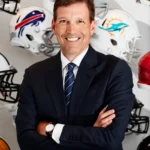
Dr. Allen Sills is the NFL's Chief Medical Officer (CMO), a full-time position dedicated to advancing the health and safety of the sport of football. Dr. Sills became the NFL's first CMO in March 2017, joining the league from Vanderbilt University Medical Center following decades practicing as a neurosurgeon specializing in the treatment of athletes.