A bare left arm halted the closing elevator doors. I noticed the hospital wristband, and then I heard the voice as the doors parted. “Doctor, I have questions.”
I’d known my patient since her diagnosis: What questions could I have left unanswered? “I’m heading to the OR for an emergency. Meet after I’m done?”
“I’m heading to my room. I’ll be here.” The elevator jerked shut and up.
Some hours later, the operation completed, I willed myself to press the elevator button to the ward floor instead of the lobby. The unit was subdued — you could hear the turning of magazine pages coming from the nurses’ station. I entered my patient’s unlit room where she sat upright in her hospital bed, staring at a poster with the words “Dream Big.”
“What are you doing up at three in the morning?”
“Doctor, I couldn’t sleep. My dreams are nightmares.”
“Steroid insomnia?”
“I’m waiting for the tumor to kill me.”
Recurrent glioblastoma. Her diagnosis howled through the room like blood weeping on a gauze. A swallow caught in my throat.
“Doctor, my incision aches and the sutures itch.”
I examined her head stitches — each one a chapter in her story. “It’s healing okay.”
“May I talk to you doctor?” The shadows on her face deepened.
The exit sign above the door flickered like the red warning lights of an emergency vehicle. Tired, I wanted to rest. But the glow from the telemetry monitor lit her wristband, and I could read both our names on it. I collapsed into the chair and apprehension. Hospitals are full of secrets and at that hour, I might not remember to keep them.
“Doctor, what will happen to me?”
Steeling myself, I heard myself finally say, “There is no cure for your condition.”
“What about a miracle?”
“There is no hope for this in your struggle.”
“What about pain, doctor?”
“There will be minimal pain.”
“Oh” she said. “That’s hopeful. So I will pass without agony?”
“No,” I said, “there will be that too.”
“What agony, doctor?”
“Your sons, they will be watching.”
“Can you comfort them?”
“Only time will.”
“Is there no way, doctor, to help me pass quickly?”
“No,” I said. “The rules do not allow me to. I am so very sorry.”
“Doctor, will you be there?”
“Yes, I will come.”
“Thank you. Doctor, will you speak my eulogy?”
“No, I will feel as if I’ve failed you.”
“Tell me, doctor, will we meet again after?”
I feigned explaining “I am only a surgeon. Perhaps you require a philosopher or a priest.”
“Doctor, you operated on my brain. Did you not see my soul?”
“No, but every time I open the skull I recognize mine.”
“Doctor, you are the one I trust with my life. Please, what do you think? Will I see my sons after I pass? Tell me, please.”
I knew what she wished me to say. But I couldn’t. “No, but others may tell you different.”
She picked up a card from the bedside tray. “My close friend gave me this note.” It read, “Everything happens for a reason.”
“Yes, but the reasons are random.”
“Then my brain cancer was not predetermined? There really is no hope, doctor?”
“Only the end.” The lump in my throat grew raw.
“What’s that, doctor?”
“Nothing.”
Here in the dim room, the diagnoser and terminally diagnosed regarded each other with eyes moist like a leaky wound. For an instant, I might have glimpsed her soul.
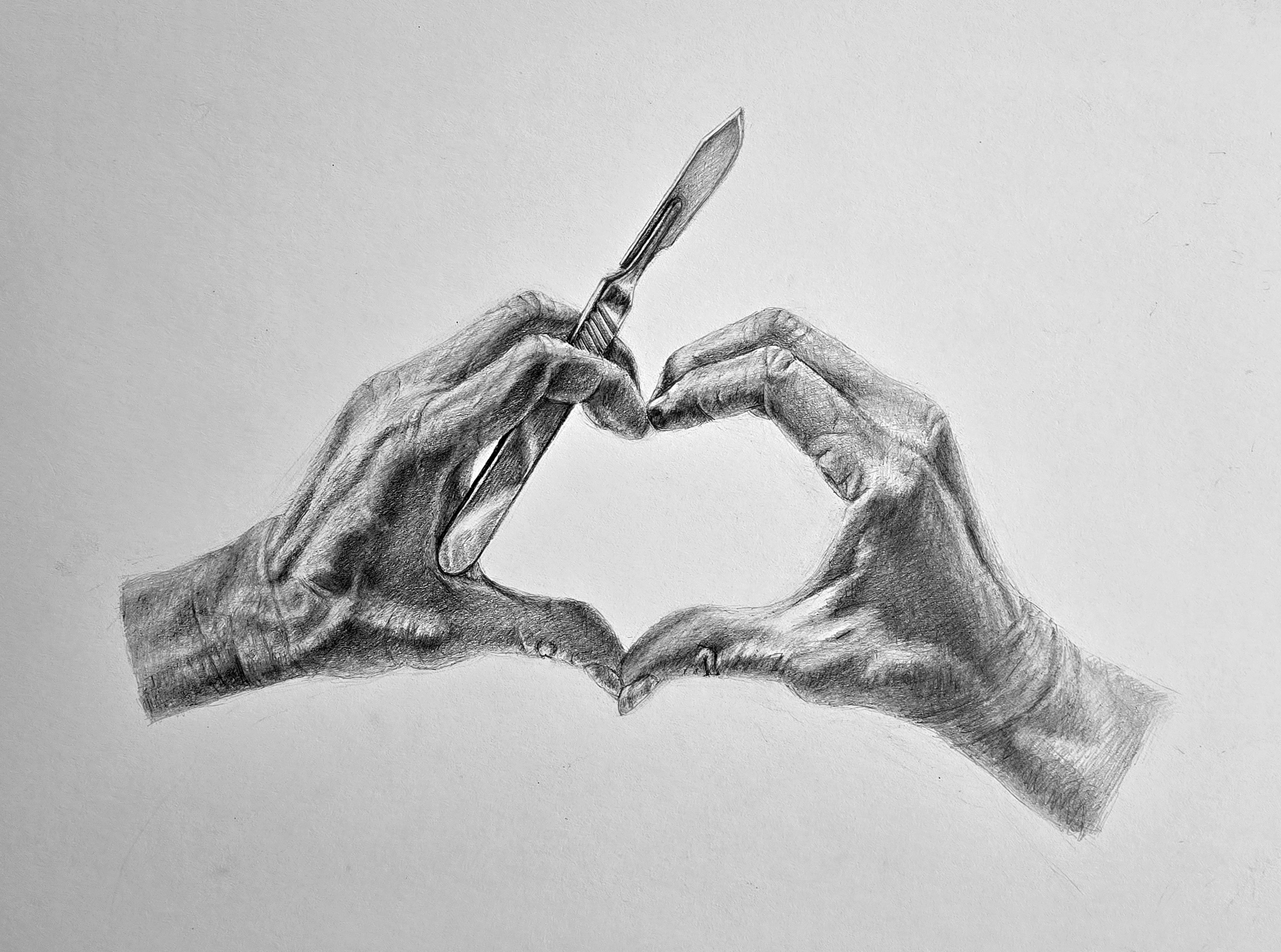
She walked with me to the elevator, her left leg lagging. We were both heading out. She blocked the elevator doors again and before they closed she curled her hands into a heart. This was the last time both our names would appear on her wristband.
Alone in the elevator, I couldn’t breathe, that heart gesture a sucker punch to my chest. I had failed, yet she didn’t blame me.
The elevator door opened, and a janitor’s cart rolled in. “Rough night, doctor?” she asked.
Exiting, I said, “Yes the hardest.” Tonight, the slope of hope was steep.
A broom handle held the elevator open. The janitor who knew every secret closet and hidden corner of this building called after me. “Doctor, there are no rules for crying.”
The ground gave way. Glioblastoma god damn.
The views and opinions expressed in this post are those of the author and do not necessarily reflect those of the American Association of Neurological Surgeons.
For reference: The phrase “god damn” comes from the very popular Nina Simone tune “mississippi god damn”.

Dr. Ko completed training at Mt. Sinai Medical Center and earned a Master’s of Fine Art in 2012. Her neurosurgery practice and art studio are located in New York City. She is the Artist in Residence at the Living Museum and served as the inaugural Artist in Residence for the American Medical Women's Association. Her paintings, drawings, cartoons and videos can be viewed on TikTok @doc_ambidexter.